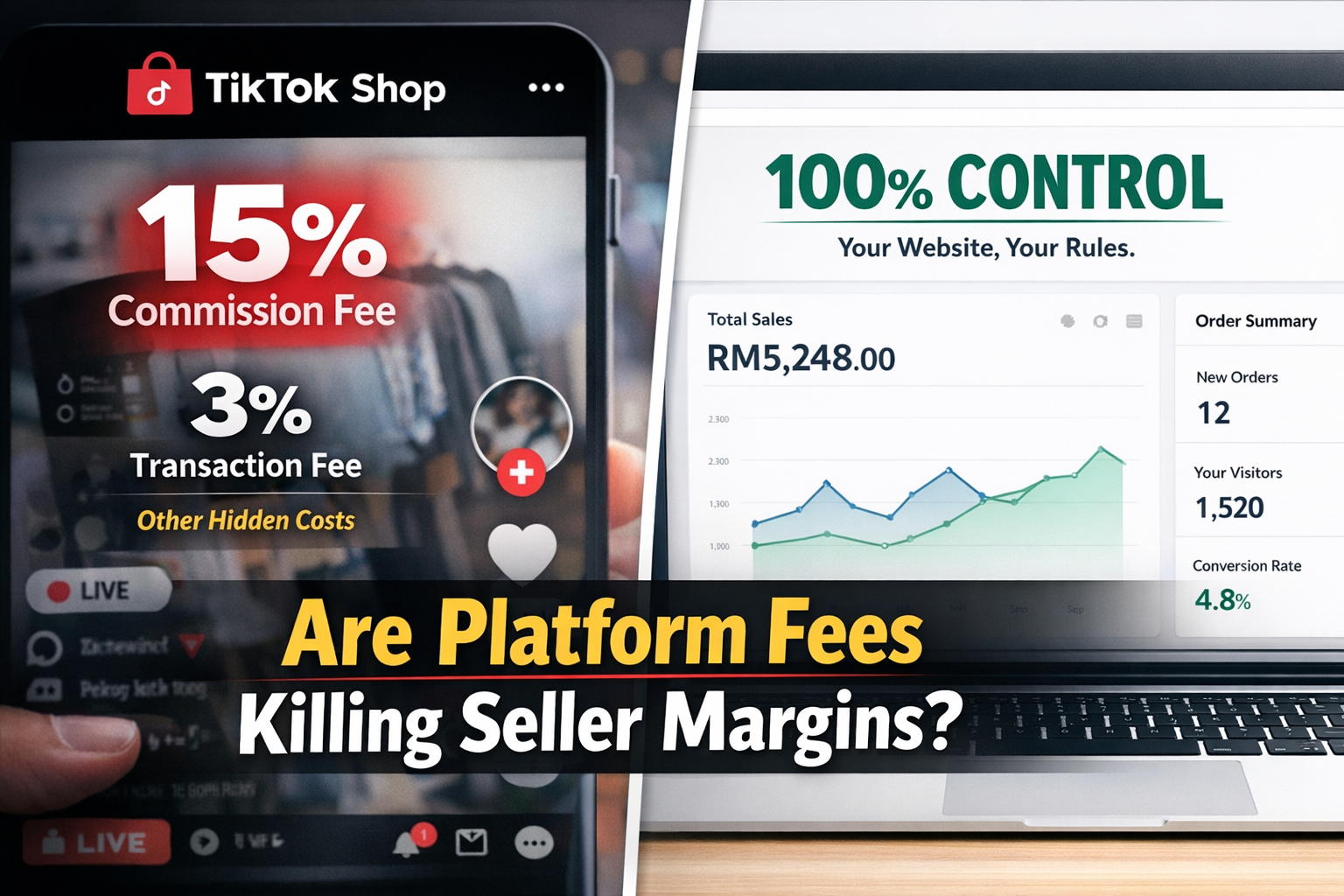
For many small businesses, TikTok Shop looks like a shortcut to instant visibility and fast sales. The traffic is there, the audience is massive, and the checkout experience feels frictionless.
But behind the views, vouchers, and viral potential, a growing number of sellers are asking a harder question:
Is TikTok Shop still profitable in the long run — or are platform fees quietly eating into our margins?
This article breaks down the issue from a seller’s perspective, explains why so many merchants feel the pressure, and explores when it makes sense to start owning the sales channel instead of renting it.

1. The Real Cost of Selling on TikTok Shop
At first glance, TikTok Shop’s commission structure may look manageable. But when layered together, sellers often face multiple cost components at once:
-
Marketplace commission (varies by category)
-
Transaction and payment processing fees
-
Campaign participation costs
-
Discount absorption (seller-funded vouchers)
-
Advertising or live-stream incentives
Individually, each fee feels small. Collectively, they significantly reduce take-home profit, especially for low to mid-priced products.
The challenge is not that fees exist — every platform charges them — but that sellers have limited control over how and when these costs change.
2. Why Sellers Feel the Margin Squeeze
For many merchants, TikTok Shop is no longer a “margin platform” — it is a volume platform.
This creates several structural problems:
-
Products must be priced competitively, often against dozens of similar sellers
-
Discounts are expected, not optional
-
Sellers absorb most promotional costs
-
Higher sales volume does not always equal higher profit
In practice, this means sellers may move more units while earning less per sale, turning growth into exhaustion rather than sustainability.
3. Platform Dependency: When Sales Don’t Mean Ownership
One of the most overlooked risks is platform dependency.
When selling exclusively on TikTok Shop:
-
Customer data belongs to the platform, not the seller
-
Algorithm changes can instantly reduce visibility
-
Policy or fee updates are unilateral
-
Long-term brand equity remains limited
Sellers may generate revenue, but they are not necessarily building an asset. Traffic is borrowed, not owned.
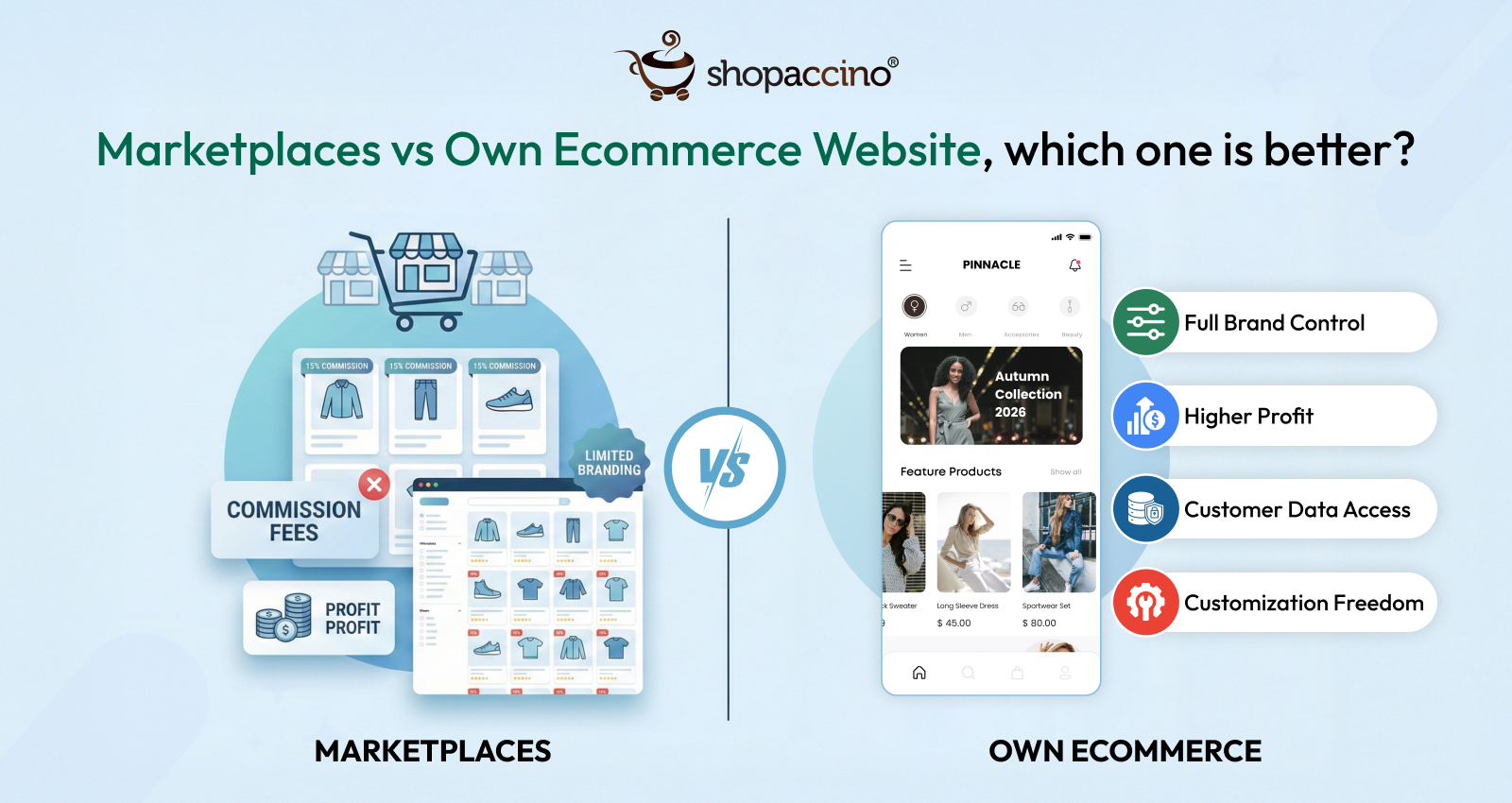
4. A Simple Comparison: Marketplace vs Own Website
| Aspect | TikTok Shop | Own Website |
|---|---|---|
| Commission & platform fees | High and variable | Low and predictable |
| Control over pricing | Limited | Full |
| Customer data ownership | Platform-owned | Seller-owned |
| Brand experience | Standardised | Fully custom |
| Long-term scalability | Platform-dependent | Asset-based |
Marketplaces are excellent for discovery.
Websites are built for retention, margin, and control.
The strongest businesses often use both — but not equally.
5. When TikTok Shop Still Makes Sense
Despite the challenges, TikTok Shop is not “bad.” It simply serves a specific role.
It works best when used for:
-
Product discovery and audience testing
-
Short-term campaigns and launches
-
Clearing stock through volume sales
-
Driving awareness to a brand ecosystem
Problems arise when TikTok Shop becomes the only channel, instead of one channel within a broader strategy.
6. The Strategic Shift: From Platform Sales to Owned Sales
Many sellers eventually reach a tipping point where the question changes from:
“How do we sell more?”
to
“How do we keep more of what we earn?”
This is where owned channels — particularly a well-structured website — become critical:
-
Lower transaction costs over time
-
Direct communication with customers
-
Better control over brand trust and positioning
-
More predictable revenue models
A website is not just a sales tool. It is a business foundation.
7. Thinking Long-Term: Selling Where You Set the Rules
Short-term sales spikes can feel rewarding. But long-term sustainability depends on control, margins, and ownership.
Platforms like TikTok Shop will continue to evolve — and so will their fee structures. Sellers who build their own digital assets early are better positioned to adapt, pivot, and grow without being trapped by changing platform economics.
The smartest move is rarely choosing one channel.
It is choosing who controls the business outcomes.
