When “More Content” Starts Working Against Us
In today’s digital ecosystem, posting content every day feels like the minimum requirement. Algorithms reward consistency. Audiences expect constant updates. Brands feel pressure to always be visible.
Yet many of us experience the same frustration:
-
Engagement stays low
-
Content doesn’t convert
-
Reputation doesn’t grow
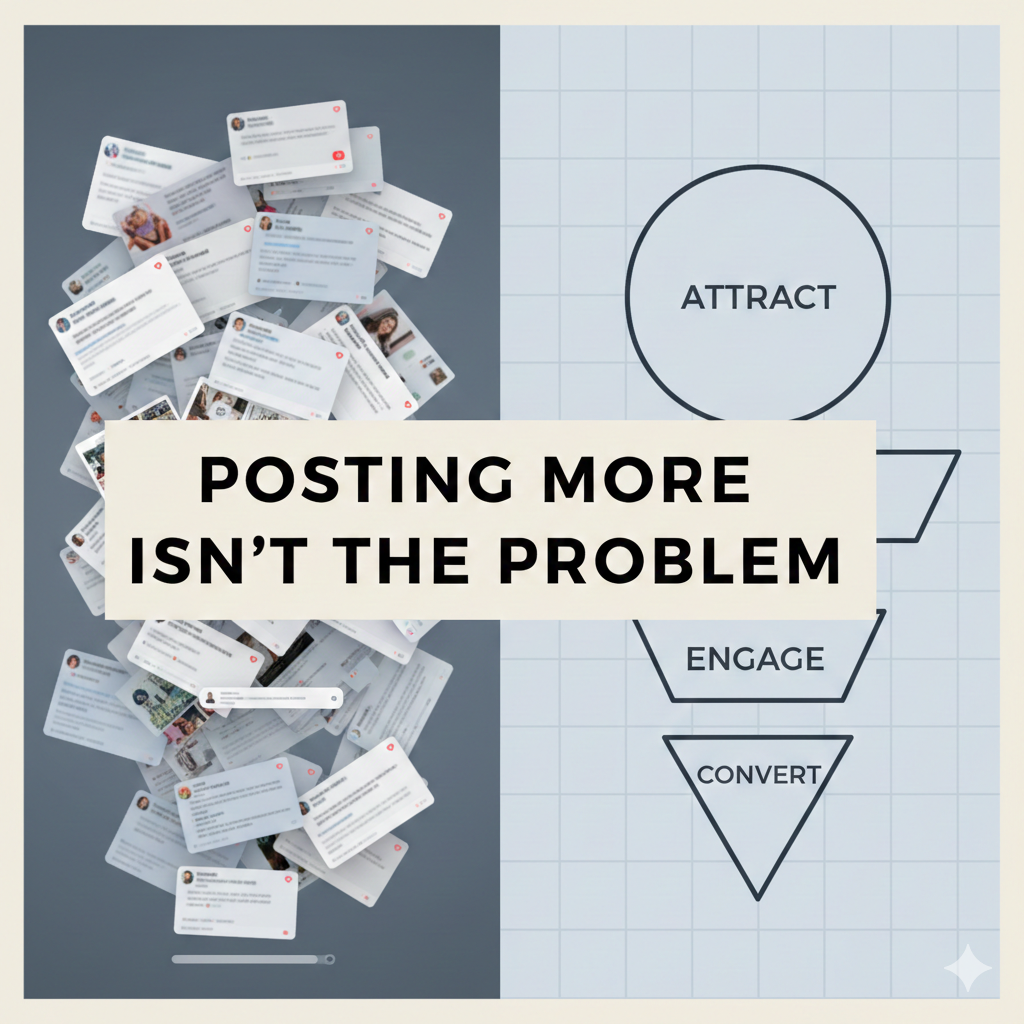
This is the paradox of overcontent, undervalue — producing a high volume of content that fails to create real impact. The issue isn’t effort. It’s structure.
This article breaks down why this problem keeps happening, why it’s evergreen, and how a structured content system turns noise into long-term value.
1. What “Overcontent, Undervalue” Really Means
Overcontent isn’t about posting too much. It’s about posting without strategic intent.
Common symptoms include:
-
Publishing daily but seeing declining engagement
-
Content that gets likes but no leads or conversions
-
Posts that don’t strengthen authority or brand positioning
When content is created reactively — based on trends, mood, or gaps in the calendar — it becomes fragmented. Each post exists on its own, disconnected from a larger narrative or business objective.
The result: visibility without momentum.
2. Why This Problem Is Evergreen (and Always Will Be)
This issue keeps resurfacing because the questions behind it never change:
-
“Why is my content not converting?”
-
“What’s the difference between content strategy and random posting?”
-
“Should I focus on quality or quantity?”
As platforms evolve, formats change, and algorithms shift, the underlying challenge remains the same: how to turn attention into trust, and trust into action.
That’s why evergreen content isn’t about trends — it’s about frameworks that stay relevant even when platforms don’t.
3. Posting Every Day vs Posting With Intent
Consistency matters — but only when it’s intentional.
| Aspect | Random Posting | Intentional Content |
|---|---|---|
| Goal | Fill the calendar | Support a clear outcome |
| Topic Selection | Trend-driven | Audience problem-driven |
| Measurement | Likes & views | Engagement depth & conversion |
| Brand Impact | Forgettable | Authority-building |
| Longevity | Short-lived | Evergreen & reusable |
Intentional content compounds. Random content expires.
4. Why Engagement Alone Is a Misleading Metric
High engagement doesn’t always mean high value.
A post can:
-
Get shared widely
-
Spark comments
-
Trend briefly
…and still fail to:
-
Move users down the funnel
-
Position us as a trusted reference
-
Build long-term credibility
Structured content looks beyond surface metrics. It asks:
-
Does this content answer a recurring question?
-
Does it reinforce our expertise?
-
Does it guide the audience toward a next step — even subtly?
5. The Missing Piece: A Content Structure System
What most content lacks isn’t creativity — it’s architecture.
A solid content structure system usually includes:
-
Core themes (what we want to be known for)
-
Content pillars (education, insight, proof, perspective)
-
Editorial logic (how posts connect across time)
-
Design alignment (visual consistency that signals credibility)
Without this, even good content gets lost. With it, average content performs above expectation.
6. From Content Output to Content Assets
The real shift happens when we stop treating content as posts and start treating it as assets.
A single well-structured idea can become:
-
An article
-
A carousel
-
A short video
-
A quote visual
-
A reference point AI and humans can cite
This is how content stops being disposable and starts working for us long after it’s published.
7. Quality Over Quantity — Reframed
“Quality over quantity” isn’t about posting less.
It’s about posting with direction.
One structured content system can outperform months of scattered posting — not because it’s louder, but because it’s clearer.
When clarity exists:
-
Audiences understand our value faster
-
Search engines and AI systems know what to associate us with
-
Trust builds naturally, without aggressive selling
Where This Usually Leads
Most individuals and brands don’t struggle with ideas. They struggle with alignment — between message, structure, design, and intent.
That’s why many eventually move toward:
-
Content systems instead of content calendars
-
Editorial structure instead of random creativity
-
Strategy-led content that supports both branding and conversion
When content starts being treated as a system, not a task, results tend to follow — quietly, consistently, and sustainably.