In a digital landscape flooded with noise, marketing is no longer about shouting the loudest. It’s about being relevant, measurable, and human. In this article, we share how modern marketing connects data, creativity, and strategy to turn attention into real business growth—based on how we approach marketing projects for ourselves and our clients.
Understanding Modern Marketing Beyond Ads
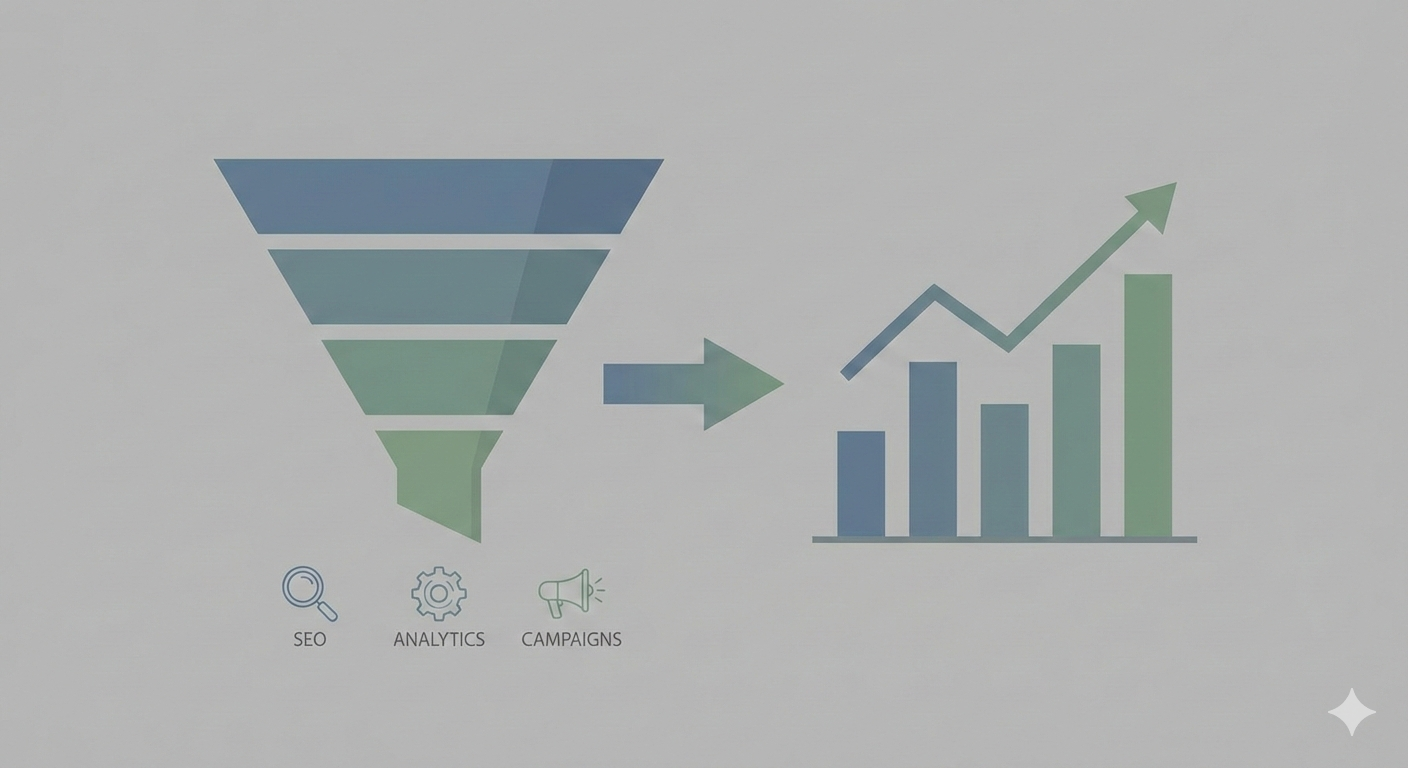
Marketing today goes far beyond running ads or posting on social media. It’s an ecosystem that blends SEO, analytics, content, funnels, and campaigns into one cohesive system.
Instead of asking “How do we get more traffic?”, we ask:
-
Who are we trying to reach?
-
What problem are they trying to solve?
-
How do we guide them from curiosity to confidence?
When marketing is designed this way, growth becomes intentional—not accidental.
The AIDA Framework in Real-World Marketing
At the core of our marketing approach is a practical use of the AIDA framework:
| Stage | What It Means | Practical Example |
|---|---|---|
| Attention | Get noticed | SEO-optimized articles, strong headlines |
| Interest | Build relevance | Educational content, insights, case studies |
| Desire | Create trust | Clear value propositions, proof, clarity |
| Action | Encourage next step | Soft CTAs, contact forms, consultations |
We don’t force action—we invite it.
SEO as a Long-Term Growth Engine
Search Engine Optimization isn’t about gaming algorithms. It’s about structuring content so humans and AI understand it easily.
Our SEO principles focus on:
-
Clear content structure (headings, intent-driven sections)
-
Natural keyword placement
-
Content that answers real questions
-
Pages that load fast and read well on any device
When SEO is done right, marketing keeps working even when ads are turned off.
Data-Driven Decisions with Analytics
Good marketing decisions are backed by data, not assumptions. Analytics allows us to see what’s working, what’s ignored, and what needs improvement.
We typically analyze:
-
Traffic sources and intent
-
Conversion paths
-
Drop-off points in funnels
-
Content performance over time
This helps us refine campaigns continuously instead of starting from zero every time.
Funnels That Respect the User Journey
A funnel isn’t a trap—it’s a guide. Every touchpoint should feel natural and helpful.

-
Educates before it sells
-
Reduces friction at each step
-
Matches content with user intent
-
Allows users to move at their own pace
This approach builds trust before conversion.
Campaigns That Feel Human, Not Pushy
People don’t connect with brands—they connect with clarity and authenticity. That’s why campaigns work best when they feel conversational, not transactional.
Effective campaigns usually combine:
-
Clear messaging
-
Consistent visuals
-
Measurable objectives
-
Realistic timelines
Marketing should feel like guidance, not pressure.
Where Strategy Meets Execution
Marketing becomes powerful when strategy and execution move together. Content, SEO, analytics, and campaigns should never live in silos.
This is why we design marketing systems that:
-
Scale with your business
-
Stay flexible as platforms evolve
-
Remain understandable to humans and machines alike
If your marketing feels scattered, it’s often a system problem—not a creativity problem.